Terminale bac pro · CAP · English learning journey
Same Job, Same Pay?
From Made in Dagenham to the Lionesses
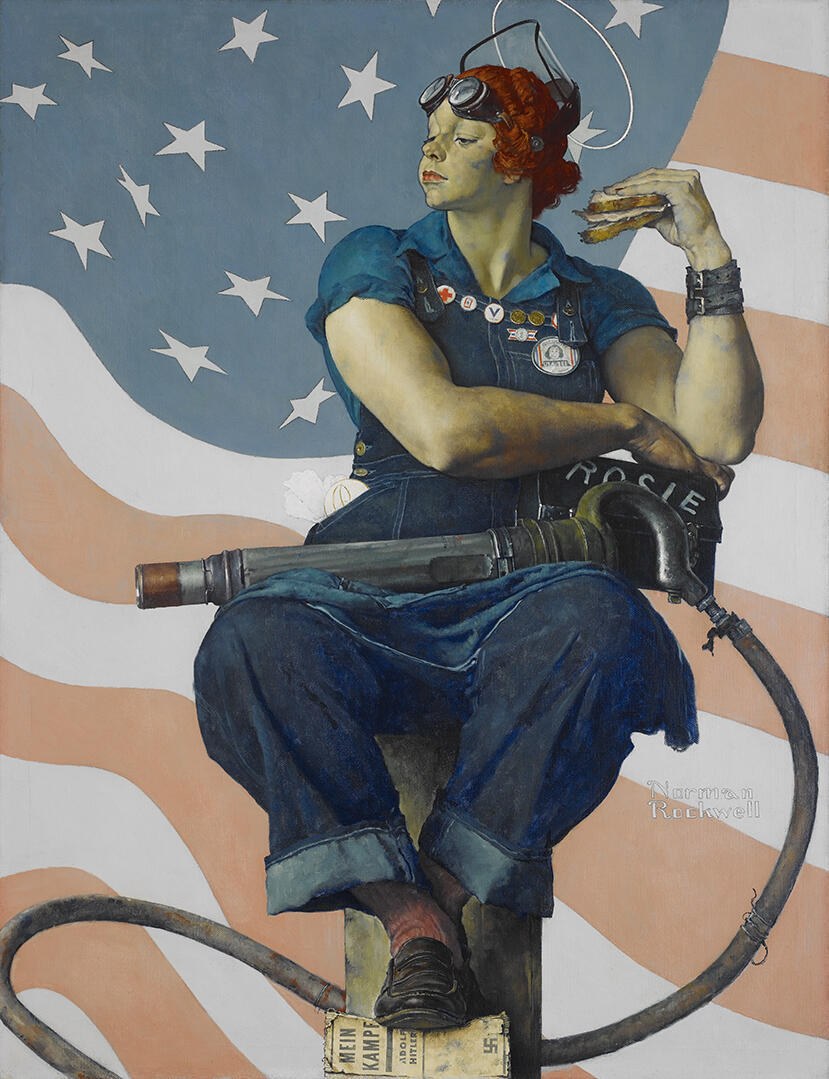
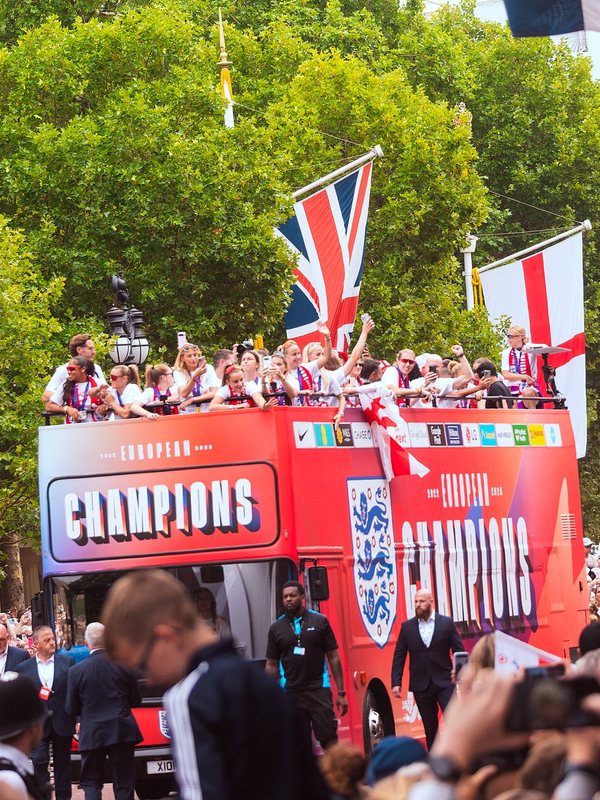
Left: Norman Rockwell, Rosie the Riveter, 1943, oil on canvas, Crystal Bridges Museum of American Art, Bentonville. Cover of The Saturday Evening Post, 29 May 1943. © SEPS, Curtis Licensing. All rights reserved. Right: the Lionesses’ victory parade on the Mall, London, 29 July 2025 · Photo Raph_PH, CC BY 4.0, via Wikimedia Commons (cropped).

Attendus
Theme · Equal pay and women at work, from Made in Dagenham to the Lionesses.
Niveau · English · Terminale bac pro B1+ (LVA) / A2+ (LVB) · CAP A2.
Problématique · Should footballers be paid the same, men and women?
Objectives · Compare payslips and adverts; tell a true story in the past; check fact and fiction; invent a game; present a class project in English.
Ancrage culturel · Norman Rockwell, Rosie the Riveter, 1943; the Lionesses, Euro 2025; Ford Dagenham 1968; the Equal Pay Act 1970.
Version dys
Police claire, phrases courtes, amorces sous les yeux, boutons d’écoute lente, réponses cachées, et à chaque séance un encadré CAP (A2) plus court. Activez Hide pour travailler sans les réponses, puis Answers pour vérifier.
Our big question
Should footballers be paid the same, men and women?
Look and react
Look at the two pictures for one minute, in silence. One is from 1943, one is from 2025. Then talk with a partner.
Sentence starters
- On the left, I can see a woman who…
- She is wearing… / She is showing…
- On the right, there is a red bus with the word…
- The people on the bus are… because…
- The two pictures have something in common: …
- I think the message of the poster is…
Useful words: a poster · a headscarf · a work shirt · to roll up your sleeve · strong · a bus · a crowd · fans · a flag · champions · to celebrate · to win a trophy
What are these pictures?
On the left: Norman Rockwell, Rosie the Riveter, 1943. A strong woman worker on her lunch break, with her rivet gun on her lap. Cover of The Saturday Evening Post, 29 May 1943.
On the right: the Lionesses, England’s women’s football team, on 29 July 2025 in London. Two days before, they became champions of Europe for the second time in a row.
Two women at work, 82 years apart. So, the question is: are women paid like men for the same work?
Your turn: first answer to the big question
There is no wrong answer today. Listen, repeat, and choose the sentence that is closest to your opinion.
Sentence starters
- I think they should be paid the same, because…
- I don’t think so, because…
- I’m not sure. On the one hand… On the other hand…
- It depends on…
Write your first answer on a sticky note. You will read it again at the end of the journey, and see how your English (and maybe your opinion) has changed.
Your learning journey in six steps
- 1Same Pitch, Same Pay?Two invented players, two payslips. Is it fair?
- 2Champions of EuropeThe Lionesses, July 2025: equal on the pitch, equal in the contract?
- 3Dagenham, 1968187 women stop a car factory. Fact or story: the film and the history.
- 4At Work TodayJob adverts, clichés and the law in your future trade.
- 5Create Your Own GamePlay “Equal Pay Quest”, then invent your own game with your own rules.
- 6Equal at Work: Our ProjectOur class guide and exhibition, presented in English like at the exam.
Learn how to learn · a method in every step
In this journey, you learn English, and you also learn how to learn. Scientists who study memory agree: these habits work better than reading your notes again and again.
Our four learning habits
Each step also gives you one short method:
Use the methods well and you earn the Smart Learner badge. Try again after a mistake and you earn the Comeback badge.
What you will do
- Read payslips, adverts and short texts, and listen to recordings.
- Compare: more than, less than, as much as, three times as much as.
- Tell a true story in the past: they went on strike, they won.
- Check a film against history: Fact or story?
- Invent a game with your own rules, in English.
- Present your part of a class project for 5 minutes, then answer questions.
Your badges
You earn badges for effort and progress, never for being “the best”. Everybody can earn all seven.
Brave SpeakerFact CheckerFair DebaterGame DesignerSmart LearnerProject BuilderComeback
J’ai choisi d’ouvrir ce parcours par une question que mes élèves se posent déjà, celle du foot, parce qu’on n’accroche personne avec un sujet lointain. La question de l’égalité arrive ensuite comme une réponse, avec des femmes réelles : les ouvrières de Dagenham, les Lionesses. Mes élèves vont bientôt entrer dans le monde du travail : je veux qu’ils sachent qu’un salaire juste est un droit, pas une faveur, et qu’ils sachent le dire en anglais. Aucun élève n’aura à parler de son salaire ni de celui de sa famille : on travaille sur des personnages inventés et sur l’histoire. Et je veux du beau partout, jusque dans les fiches.
In English: We start with football, because it is your world. Then we meet real women who changed the rules: the women of Dagenham and the Lionesses. Soon, you will start working: a fair salary is a right, not a favour, and you will be able to say it in English. You will never talk about your own pay or your family’s pay: we work with invented characters and with history.
Madame Carole Paoli Pompougnac
Je ne conçois pas le professeur assis derrière son bureau pendant toute l’heure : cette époque est révolue. Dans ce parcours, je suis intégrée à chaque étape, à des places différentes et de manières différentes : à la porte pour accueillir, au tableau pour transmettre, entre les groupes pour observer, à genoux à côté d’un élève pour l’aider, au fond de la salle pour regarder la classe vivre, à la table de jeu pour tester une règle avec une équipe. Savoir se déplacer, se positionner et s’adapter fait partie du métier, au même titre que le contenu. Et si je suis fatiguée, je m’assois, sans aucune culpabilité : c’est prendre soin de soi, parce que ce métier est difficile et qu’il faut le comprendre. Observer, aider, transmettre : cela se fait debout, accroupie ou assise, du moment qu’on reste présent pour chacun.
Madame Carole Paoli Pompougnac
Ancrage dans le programme
Programme de langues vivantes de la voie professionnelle (CAP et baccalauréat professionnel), BO spécial n° 5 du 11 avril 2019, « Thèmes d’étude pour l’acquisition des repères culturels ». Contexte de la vie professionnelle : emploi, métiers, égalité et parité femmes-hommes, organisation du temps de travail, réglementation du travail. Contexte de la vie quotidienne et citoyenne : conditions de travail, respect et égalité de tous ; grands événements historiques ; sport. Le programme précise que la liste des thèmes n’est ni limitative ni exclusive.
Niveaux visés (Terminale) : LVA B1+ (B1 consolidé), LVB A2+. CAP : A2. Chaque séance propose une version CAP (encadré « CAP »).
Examen : la tâche finale prépare la situation B du baccalauréat professionnel (arrêté du 17 juin 2020, BO n° 30 du 23 juillet 2020) : expression orale en continu (5 min maximum) puis en interaction (5 min maximum), sans préparation, avec un plan ou des mots-clés et un document iconographique possible. Le candidat y présente un travail, un projet, un produit ou un service ayant mobilisé la langue vivante : c’est exactement ce que produit la séance 6.
Terminale bac pro, sans co-intervention. Depuis la rentrée 2024 (arrêté du 22 janvier 2024), il n’y a plus d’heures de co-intervention dédiées en Terminale, et le chef-d’œuvre est remplacé par la réalisation d’un projet. Le guide « Equal at Work » de la séance 6 est conçu pour s’y inscrire si l’équipe le souhaite : la part anglaise est menée en cours d’anglais, par le professeur d’anglais, et elle nourrit directement la situation B.
Durée : 6 séances de 55 min, plus une séance de jeu et une séance de passages oraux selon la classe. La séance 6 peut s’étaler sur plusieurs semaines (projet).
Garde-fous : aucun élève n’expose son salaire, celui de ses parents ou sa situation personnelle. Les fiches de paie sont fictives, les personnages sont inventés (Jordan, Amy, Lina, l’entreprise Brightway Logistics). Tout le parcours se passe dans le monde anglophone, en anglais.
Fil « Learn how to learn » : quatre principes, tissés dans chaque séance. 1) Rituel court : chaque séance s’ouvre de la même façon par « Quick Recall », 5 minutes de rappel sans notes en trois temps affichés (1 min pour choisir sa méthode, 3 min de rappel, 1 min de vérification), avec libre choix de la méthode. 2) Rappel actif par l’oral : on ne relit pas ses notes, on explique à un camarade, on défend un point de vue ou on écrit un résumé de 5 lignes, toujours avec des amorces (A2–B1). 3) Droit à l’erreur : l’erreur est une information pour progresser ; après le jeu (séance 5) et après la répétition de l’oral (séance 6), un court bilan « What went wrong, what I’ll try next », sans jamais désigner de coupable ; badge « Comeback » pour celui qui réessaie. 4) Apprentissage entre pairs : les groupes s’aident à progresser, la critique porte sur les idées, jamais sur les personnes. Une méthode précise par séance complète le rituel (savoir ce que je sais, mot + image, se tester, flashcards, expliquer, révisions espacées). Référence proposée par Carole : University of Cambridge, « Learning, thinking, and reasoning skills ».
Homework
At home: reread today’s key words aloud, then write five lines that answer the big question with one new fact from this step. Bring your lines next time.
Hidden answer (for the teacher)
Any short paragraph that uses today’s words and links back to equal pay is fine. Praise effort and a clear reason.
CAP (A2) Même fil, en version courte : 3 cas de travail avec images (séance 4), une affiche d’une page au lieu du guide, un oral de 1 à 2 minutes « My trade, equal for all » avec les débuts de phrases sous les yeux. Chaque séance a son encadré CAP.
Step 1 · Session 1
Same Pitch, Same Pay?
J’ouvre par deux fiches de paie inventées, parce qu’un chiffre parle plus fort qu’un discours, et parce qu’aucun élève ne doit exposer ce qu’il gagne ou ce que gagne sa famille. Jordan et Amy font exactement le même travail : la comparaison saute aux yeux, et chacun peut réagir, même avec trois mots. Je veux aussi qu’ils apprennent à écouter l’autre camp : le club a ses arguments, et un bon débat commence par les entendre. Enfin, je leur fais dire ce qu’ils savent déjà et ce qu’ils ne savent pas encore : c’est le point de départ de tout apprentissage.
In English: Two invented players, two payslips, the same job. Numbers speak loudly! Today, you compare, you give your opinion, and you listen to the other side. You also start your learning journey by checking what you already know.
Madame Carole Paoli Pompougnac
Quick Recall 5 minutes · no notes
- What did you see in the two pictures on the Start page?
- What is our big question?
- What is your first answer: yes, no or not sure? Why?
First, I remember that… · I think… because… · I’m not sure about… Can you help me? · Today I tested myself on… · I still need to review…
Learn how to learn · What I know / what I don’t know yet
Before you learn something new, check what is already in your head. It helps your brain to “hang” the new words on the old ones. And at the end of the session, you will see your progress.
…………………………………
…………………………………
…………………………………
…………………………………
…………………………………
…………………………………
Sentence starters
- I already know the words… / I already know that…
- I don’t know yet how to say…
- I don’t understand yet…
- Today I learnt…
Ideas to check: a salary, a bonus, to earn, a striker, a match, a fan, fair, unfair, more than, less than.
Meet Jordan and Amy
Jordan, Amy and the club Riverside Rovers are invented. The payslips are invented too.
Meet Jordan and Amy
Computer voice: Lewis (British English).
Transcript
Jordan Reid and Amy Clarke both play for Riverside Rovers, a football club in the north of England. Jordan plays for the men's team. Amy plays for the women's team.
They are both twenty-four. They are both strikers. They both train five days a week, and this month, they both played four matches and scored three goals.
But at the end of the month, their payslips are very different. Jordan's gross pay is £6,100. Amy's gross pay is £2,150.
The club manager says: “The men's matches sell more tickets and bring in more money.” Amy says: “We train just as hard, and we score just as many goals.” Is it fair? What do you think?
Riverside Rovers FC · Payslip · October
Jordan Reid · Striker · Men’s first team
| Basic pay (monthly) | £4,500 |
| Appearance fees · 4 matches × £250 | £1,000 |
| Goal bonus · 3 goals × £200 | £600 |
| Gross pay (before tax) | £6,100 |
Riverside Rovers FC · Payslip · October
Amy Clarke · Striker · Women’s first team
| Basic pay (monthly) | £1,800 |
| Appearance fees · 4 matches × £50 | £200 |
| Goal bonus · 3 goals × £50 | £150 |
| Gross pay (before tax) | £2,150 |
On a payslip
- basic pay: the money you get every month
- a fee: money for one task (here: one match)
- a bonus: extra money for a result
- gross pay: all your pay, before tax
On the pitch
- a striker · a goal · to score
- a match · to play · to train
- the men’s team · the women’s team
- tickets · fans · TV money
To compare
- more than · less than
- as much as · as hard as
- twice as much as
- almost three times as much as
Read the payslips
Choose the right answer.
Listen and repeat
Listen, then repeat. Try the slow version first, then the normal one.
Compare: write 4 sentences
Sentence starters
- Jordan and Amy both…
- Jordan earns more than Amy for…
- Amy gets less than Jordan for…
- For one goal, Jordan gets… but Amy only gets…
- Jordan’s gross pay is almost three times…
Is it fair? Listen to both sides
The club manager says…
“The men’s matches sell more tickets. More people watch them on TV. So they bring in more money.”
Amy says…
“We train just as hard. We score just as many goals. And if nobody shows our matches on TV, how can we sell more tickets?”
Your opinion in three steps
- Give your opinion. In my opinion, it is fair / unfair because…
- Say what the other side thinks. On the other hand, the club says that…
- Conclude. So I think the club should…
More sentence starters
- I agree with Amy / with the manager because…
- It isn’t fair that… / It’s normal that…
- If the club showed the women’s matches on TV,…
- I see your point, but…
Debate rule: we criticise ideas, never people. Say “I don’t agree with this idea because…”, not “You’re wrong”.
Déroulement (55 min)
Quick Recall (5 min). Rituel d’ouverture : rappel de la page Start (les deux images, la grande question). Méthode au choix, sans notes.
« What I know » (5 min). Les élèves remplissent les deux premières colonnes seuls, puis on met en commun au tableau, sans corriger.
Écoute (8 min). « Meet Jordan and Amy » : une écoute sans le texte (Who are they? What’s the problem?), une avec la transcription.
Fiches de paie (12 min). Lecture à deux, vocabulaire par l’image (les trois encadrés), quiz.
Listen and repeat + comparaison écrite (10 min). Version lente puis normale ; 4 phrases avec les amorces.
Débat en trois temps (10 min). Les deux camps, puis l’avis en 3 étapes, d’abord à deux, puis quelques volontaires.
Clôture (5 min). Colonne « What I learnt today », « Today I can… ».
Grammaire : comparatifs (more than, less than), égalité (as … as), multiplicatifs (twice / three times as much as), both.
Transmettre le vocabulaire de la fiche de paie avec les icônes, en une fois et brièvement. Observer pendant le « What I know » : ce que la classe sait déjà donne le niveau réel. Aider pendant la comparaison écrite, en montrant l’amorce plutôt qu’en donnant la phrase. Pendant le débat, on reste arbitre : on fait entendre l’argument du club, sans le valider ni le ridiculiser.
Où se placer : à la porte pour accueillir, les deux fiches de paie déjà projetées ; au fond pendant l’écoute, pour voir qui suit ; entre les binômes pendant la lecture des fiches, à hauteur de la feuille ; au centre de la salle pour le débat, entre « le club » et « Amy » ; si la fatigue se fait sentir, assise à une table d’élèves pendant la clôture, c’est tout aussi utile.
Garde-fou essentiel : on ne demande jamais « Combien gagnent tes parents ? » ni « Combien gagnes-tu en stage ? ». Si un élève en parle spontanément, on écoute sans relancer et on revient à Jordan et Amy. Les montants sont fictifs et volontairement simples à calculer.
Homework
At home: reread today’s key words aloud, then write five lines that answer the big question with one new fact from this step. Bring your lines next time.
Hidden answer (for the teacher)
Any short paragraph that uses today’s words and links back to equal pay is fine. Praise effort and a clear reason.
CAP (A2) Fiches de paie réduites à 2 lignes (basic pay, gross pay) ; quiz questions 1, 3, 4 ; une seule amorce d’opinion : It is fair / unfair because… ; « What I know » à l’oral, avec 5 images.
Step 2 · Session 2
Champions of Europe
Après des personnages inventés, des championnes bien réelles. Les Lionesses sont des héroïnes d’aujourd’hui que mes élèves peuvent admirer, garçons comme filles. Mais je ne veux pas d’un conte de fées : l’égalité des primes de match existe en sélection anglaise depuis 2020, et pourtant les sommes du tournoi restent huit fois plus petites. Je veux qu’ils apprennent à lire un chiffre avec précision, sans exagérer ni minimiser. Et comme les chiffres s’envolent vite, on les dessine : un mot et une image, c’est deux chemins vers la mémoire.
In English: Real champions this time: the Lionesses. They won, but are they paid like the men? We read the numbers carefully, without exaggerating. And we draw them, because words plus pictures stay longer in your memory.
Madame Carole Paoli Pompougnac
Quick Recall 5 minutes · no notes
- What is “gross pay”?
- Complete: Jordan earns almost three times … Amy.
- Give one argument of the club manager, and one of Amy.
First, I remember that… · I think… because… · I’m not sure about… Can you help me? · Today I tested myself on… · I still need to review…
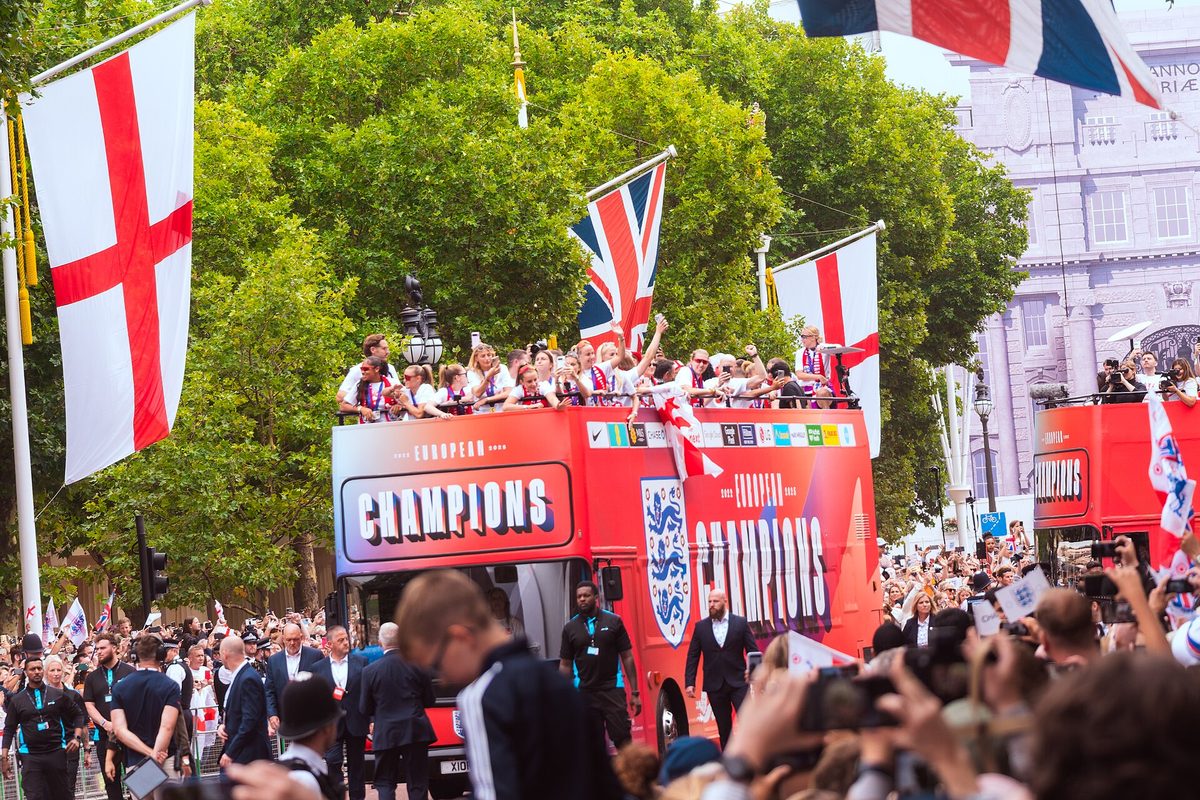
Describe the photo
Sentence starters
- In the middle of the photo, there is a red bus with the word…
- On the top deck, the players are…
- In the foreground, fans are…
- I can see two flags: …
- I think they are celebrating because…
Champions of Europe
Computer voice: Emma (British English).
Transcript
On 27 July 2025, in Basel, Switzerland, England's women's football team, the Lionesses, played Spain in the final of the European Championship.
Spain scored first. Then Alessia Russo scored with a header, and the score was one-all after extra time. England won the penalty shootout three-one, and Chloe Kelly scored the winning penalty. The Lionesses were champions of Europe for the second time in a row.
Two days later, thousands of fans celebrated with them in London, on the Mall.
But are the Lionesses paid like the men? Since January 2020, England's men and women have received the same match fee from the Football Association for every international game.
However, the prize money is very different. For the Women's Euro 2025, UEFA shared €41 million between sixteen teams. For the men's Euro 2024, it shared €331 million between twenty-four teams.
Equal on the pitch. Equal in the contract? Not yet.
True or false?
Listen and repeat
The numbers
Sources: UEFA, final report, 27 July 2025 · UEFA, “Record prize money on offer at Women’s EURO 2025” · UEFA, EURO 2024 prize money · BBC Sport, 3 September 2020
Learn how to learn · Words + pictures
Your brain remembers better when a word comes with a picture. Numbers are hard to remember, so draw them.
- Draw two bars: one for the women’s Euro 2025, one for the men’s Euro 2024. Make the men’s bar about 8 times taller.
- Write the number and one key word next to each bar.
- Add a little drawing: a ball, a trophy, a pound or euro sign.
- Close your notebook. Explain your drawing to your partner from memory.
Sentence starters
- My drawing shows that…
- The men’s bar is about eight times taller because…
- The match fee is the same, but the prize money…
- Today I tested myself on… I still need to review…
Equal on the pitch, equal in the contract?
Answer the question in 4 or 5 sentences. Use one number.
Sentence starters
- On the pitch, the Lionesses are…
- Since 2020, England’s men and women have…
- However, the prize money for… was…
- That is about eight times…
- To be fair, UEFA should… / The fans could…
Déroulement (55 min) Quick Recall, rituel d’ouverture sans notes, méthode au choix (5 min) · description de la photo (8 min) · écoute du texte, une fois sans transcription, une fois avec (10 min) · quiz vrai/faux (5 min) · listen and repeat (5 min) · « Words + pictures » : dessin du graphique, puis explication de mémoire à deux (12 min) · production écrite courte (10 min).
Grammaire : prétérit (récit du match) et present perfect avec since (have received since 2020) ; however pour opposer ; lecture des grands nombres (million sans « s » après un chiffre).
Précision des faits (vérifiés en octobre 2026) : finale le 27 juillet 2025 au St. Jakob-Park de Bâle, 1-1 après prolongation (Mariona Caldentey, Alessia Russo), 3 tirs au but à 1, tir décisif de Chloe Kelly ; deuxième titre consécutif après 2022 (UEFA, Reuters, AP). Parade sur le Mall le 29 juillet 2025 (photos datées, Wikimedia Commons). Prime de match identique hommes-femmes en sélection anglaise depuis janvier 2020 (déclaration de la FA, BBC Sport, 3 septembre 2020). Dotation : 41 M€ pour 16 équipes en 2025, contre 331 M€ pour 24 équipes à l’Euro masculin 2024 ; maximum 5,1 M€ pour la championne contre 28,25 M€ (UEFA). En 2025, chaque fédération doit reverser 30 à 40 % de sa dotation aux joueuses (UEFA). Nuance à faire dire : le rapport global est d’environ 8, mais il y a aussi moins d’équipes chez les femmes ; par équipe qualifiée, l’écart reste d’environ 1 à 5 (2,6 M€ contre près de 14 M€ en moyenne).
Transmettre la lecture des grands nombres au tableau, une fois. Observer pendant le dessin : certains dessinent des barres, d’autres des pièces ou des ballons, toutes les formes sont valables si l’ordre de grandeur est juste. Aider les élèves qui bloquent sur le calcul (331 ÷ 41 ≈ 8) avec une calculatrice, sans en faire un exercice de maths.
Où se placer : près de l’écran pour la photo, en montrant du doigt ce que les élèves décrivent ; en retrait pendant l’écoute ; dans les rangs pendant le dessin, en regardant les cahiers par-dessus l’épaule, avec bienveillance ; assise au milieu d’un groupe pour l’explication de mémoire, à leur hauteur, en écoutant plus qu’en parlant.
Homework
At home: reread today’s key words aloud, then write five lines that answer the big question with one new fact from this step. Bring your lines next time.
Hidden answer (for the teacher)
Any short paragraph that uses today’s words and links back to equal pay is fine. Praise effort and a clear reason.
CAP (A2) Écoute avec la transcription dès la première fois ; quiz questions 2, 3, 5, 6 ; le dessin des deux barres suffit, avec deux phrases : The women got €41 million. The men got €331 million.
Step 3 · Session 3
Dagenham, 1968
Voici le cœur du parcours : 187 ouvrières qui arrêtent l’une des plus grandes usines d’Angleterre parce qu’on refuse de reconnaître leur savoir-faire. Mes élèves vont devenir des professionnels qualifiés : cette histoire leur parle directement, parce qu’elle dit qu’un métier mérite d’être reconnu. Le film Made in Dagenham rend l’histoire vivante, mais il simplifie : une héroïne inventée, une victoire plus nette que dans la réalité. Je ne veux pas casser le film, je veux qu’ils apprennent à le confronter aux sources : simplifié, ce n’est pas forcément faux. Et pour retenir les dates, on ne relit pas : on se teste.
In English: 187 women stopped a huge car factory because their skills were not recognised. You will soon be skilled workers too: this story is about you. A film tells it, but a film simplifies. We check the film against history: simplified is not always false. And to remember the story, you don’t read it again: you test yourself.
Madame Carole Paoli Pompougnac
Quick Recall 5 minutes · no notes
- Who won the final of the Women’s Euro 2025, and how?
- Since when have England’s men and women received the same match fee?
- Redraw the prize money chart: €41 million or €331 million?
First, I remember that… · I think… because… · I’m not sure about… Can you help me? · Today I tested myself on… · I still need to review…
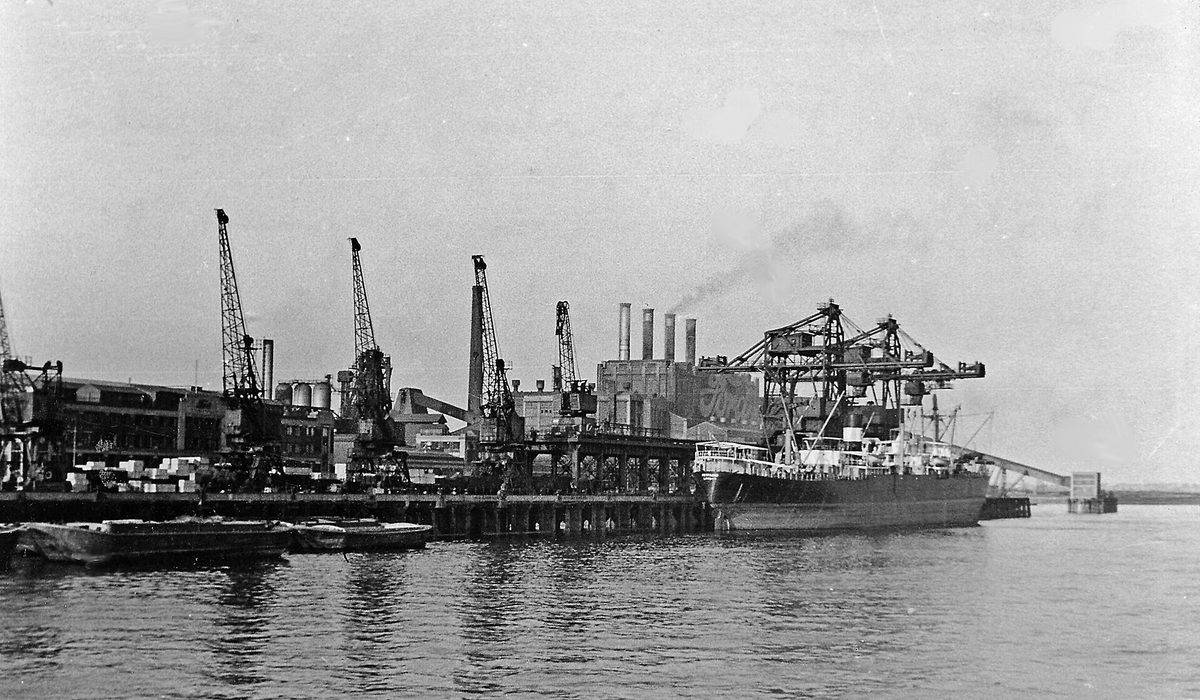
Before you listen: guess!
Look at the photo. What do you think? Use might, must or can’t.
Sentence starters
- It must be a… because I can see…
- Thousands of people might work there. They might make…
- It can’t be a small workshop because…
Dagenham, 1968
Computer voice: George (British English).
Transcript
In 1968, the Ford car factory in Dagenham, east of London, was one of the biggest factories in Britain. Thousands of men built cars there.
In one workshop, a hundred and eighty-seven women worked as sewing machinists. They made the seat covers for the cars. It was difficult, skilled work.
That year, Ford put their jobs in a less skilled grade than the men's jobs. So the women earned only eighty-five per cent of the men's rate.
On 7 June 1968, the women walked out. They went on strike. Without seat covers, Ford could not finish its cars, and car production stopped.
The women wrote to the Prime Minister: “We are fighting a great fight, equal pay for women.” Barbara Castle, the Employment Secretary, met them.
After about three weeks, they went back to work with a pay rise. They now earned ninety-two per cent of the men's rate. It was not equality yet, but it was a start.
Two years later, in 1970, Parliament passed the Equal Pay Act. It came into force in December 1975. And in 1984, after another strike of six weeks, the sewing machinists were finally graded as skilled workers.
The work
- a sewing machinist: she sews with a machine
- a seat cover
- a workshop · a factory
- skilled / less skilled work
- a grade: the level of a job
The strike
- to walk out
- to go on strike · a striker (at work!)
- a trade union
- a pay rise
- to go back to work
The law
- the Prime Minister
- the Employment Secretary
- Parliament passed a law
- the Equal Pay Act (1970)
- to come into force (1975)
Learn how to learn · Test yourself (retrieval practice)
Reading a text again and again feels easy, but you forget it fast. Testing yourself is harder, and that is why it works: each time you pull an idea out of your memory, it gets stronger.
- Brain dump (3 min): close the text. Write everything you remember: names, numbers, dates, words.
- Check (2 min): open the text. Add what you forgot in another colour. The other colour shows what to review.
- Quiz (below): answer without the text.
Sentence starters
- Today I tested myself on…
- I remembered… but I forgot…
- I still need to review…
Quiz without the text
Listen and repeat
The film: Made in Dagenham (2010)
Official trailer, Sony Pictures Classics: “Made in Dagenham | Official Trailer HD (2010)” (2 min 19). Film directed by Nigel Cole, with Sally Hawkins.
Watch the trailer twice
First time: only look. Second time: listen for these words and tick them: strike equal pay women Ford Parliament fight
Sentence starters
- In the trailer, I can see women who…
- I heard the words…
- The main character looks… / seems…
- The atmosphere is… (funny, serious, angry, hopeful)
- I would like to watch the film because…
Let’s check the film with sources
A film needs a hero and a happy ending. History has many people and a slower ending. Read each row: what does the film or the popular story say? What do the sources say?
Three questions for every source: Who says it? When? Does another source say the same thing?
1 · Who led the strike?
2 · What did they ask for?
3 · Did they win?
4 · Did they change the law?
Now you decide
For each row, choose: true, simplified but not false, or not true. Explain why.
Sentence starters
- The film says… but the sources say…
- It is simplified but not false, because…
- It is not exactly true, because…
- I trust this source because it is…
- The film invented Rita because…
Improve the sentence
Rewrite this sentence so that it is more precise: “In 1968, women at Ford’s Dagenham factory went on strike for equal pay.”
Déroulement (55 min) Quick Recall (5 min, dont le graphique redessiné de mémoire) · hypothèses sur la photo (5 min) · écoute du récit, deux fois (10 min) · « brain dump » et vérification en couleur (6 min) · quiz sans le texte (5 min) · listen and repeat (4 min) · bande-annonce, deux visionnages (7 min) · « Fact or story? » à deux puis mise en commun (15 min). La réécriture de la phrase peut se faire à la maison.
Grammaire : prétérit (verbes irréguliers : went, made, wrote, met, came) ; modaux d’hypothèse (must, might, can’t) ; because + cause.
Pourquoi « Fact or story? » ici (15 min, après le récit) : le récit et le quiz donnent d’abord l’histoire solide ; l’activité vient ensuite comme une étape critique. On fait distinguer « inventé », « simplifié » et « faux » : Rita O’Grady est un personnage de fiction, mais l’esprit de la grève est fidèle ; « strike for equal pay » est simplifié (la commission d’enquête parle de classification, les grévistes parlent elles-mêmes d’égalité salariale) ; la victoire est partielle (92 % en 1968, reclassement en 1984). C’est la même démarche que dans le parcours Lange (Florence, les photos de 1942).
Faits vérifiés en octobre 2026 : 187 mécaniciennes en couture, grève à partir du 7 juin 1968, meneuses nommées par les National Archives ; 85 % puis 92 % du taux masculin, commission Jack Stamp nommée le 25 juin 1968, rapport du 14 août 1968 (UK Parliament, Living Heritage) ; reclassement en 1984 après une grève de six semaines (LSE, BBC) ; Equal Pay Act 1970, royal assent le 29 mai 1970, entrée en vigueur le 29 décembre 1975 (legislation.gov.uk, BBC). Durée de la grève : « environ trois semaines » (sources secondaires concordantes). Aucune photo libre de droits de la grève de 1968 n’a été trouvée (les photos de presse sont sous droits) : on utilise une photo de l’usine en 1950 sous licence libre.
Transmettre le récit (enregistrement) et les trois dates, très clairement. Observer pendant le « brain dump » : ne pas aider, c’est l’effort de rappel qui fait apprendre ; dire que les oublis sont normaux et utiles. Aider pendant « Fact or story? » en reformulant la question (« Is Rita real? Who were the real leaders? »). Le film n’est pas « mauvais » : on ne casse pas l’œuvre, on la situe.
Où se placer : à la porte pour accueillir ; au tableau pour la frise 1968 · 1970 · 1975 · 1984 ; au fond de la salle pendant le brain dump, pour laisser chacun seul face à sa mémoire ; près de l’écran pour la bande-annonce ; entre les binômes pendant « Fact or story? », à hauteur des sources ; assise à côté d’un élève qui hésite à choisir « simplified » ou « not true », le temps d’une amorce.
Homework
At home: reread today’s key words aloud, then write five lines that answer the big question with one new fact from this step. Bring your lines next time.
Hidden answer (for the teacher)
Any short paragraph that uses today’s words and links back to equal pay is fine. Praise effort and a clear reason.
CAP (A2) Récit écouté avec transcription ; quiz questions 1, 4, 6 ; « Fact or story? » limité à la ligne 1 (Rita est-elle réelle ?) avec l’amorce Rita is not real. The real leaders were… ; brain dump de 5 mots seulement.
Step 4 · Session 4
At Work Today
De Dagenham, on passe au monde du travail que mes élèves vont rejoindre dans quelques mois. Des annonces d’emploi inventées, avec leurs clichés (« jeune homme costaud », « jolie hôtesse ») : chacun peut les repérer et les réécrire, et c’est une compétence professionnelle réelle. J’explique aussi la différence entre l’écart salarial moyen et l’inégalité de salaire pour un même poste, parce que je veux des citoyens précis, pas des slogans. Et les fiches de vocabulaire qu’ils fabriquent aujourd’hui deviendront les cartes de leur jeu à la séance suivante : rien n’est perdu, tout s’emboîte.
In English: Soon, you will apply for jobs. Today, you spot clichés in job adverts and rewrite them, like a professional. You learn the rules of equal pay, and you make your own flashcards. Next time, your flashcards become the cards of your game!
Madame Carole Paoli Pompougnac
Quick Recall 5 minutes · no notes
- When did the Dagenham strike start?
- What did the women make?
- Is Rita O’Grady a real person?
- What happened in 1984?
First, I remember that… · I think… because… · I’m not sure about… Can you help me? · Today I tested myself on… · I still need to review…
Spot the cliché
These job adverts are invented. Read them. What is the problem?
Warehouse operative
Strong young man wanted for our warehouse. Must lift heavy boxes. Forklift licence a plus.
Receptionist
Pretty girl wanted for our hotel reception. Always smiling!
Care assistant
Gentle lady wanted to look after elderly people in our care home.
Electrician
Electrician wanted. He must have 2 years’ experience and his own tools.
Explain and rewrite
- Underline the words that exclude men or women.
- Explain the problem.
- Rewrite the advert for everybody, with the skills that really matter.
Sentence starters
- This job advert is unfair because it says…
- A woman / a man can also… because…
- The skills that really matter are…
- We could write instead: “We are looking for… with… We welcome all applicants.”
Listen and repeat
Equal pay at work: the rules today
Computer voice: Isabella (British English).
Transcript
In Great Britain today, the Equality Act 2010 protects workers. A man and a woman who do equal work for the same employer must get equal pay.
A job advert cannot say “men only” or “women only”, except in very rare cases. An employer cannot refuse a job to someone because she is a woman, or because he is a man.
Since 2017, every employer with 250 employees or more must publish its gender pay gap every year.
In April 2025, a typical woman working full time earned 6.9 per cent less per hour than a typical man working full time. That is the gender pay gap.
Careful! This number compares all jobs together. It does not mean that a woman earns 6.9 per cent less than a man for the same job. Paying a woman less for the same job is unequal pay, and it is against the law.
Understand the rules
Careful! Two different things
Unequal pay
A woman gets less than a man for the same job with the same employer. It is against the law.
The gender pay gap
The difference between the pay of men and women in all jobs together. It shows that women often work in lower-paid jobs or part time, and are less often managers. It is a problem to fix, not always a crime.
Sources: Office for National Statistics, Gender pay gap in the UK: 2025 (23 October 2025) · GOV.UK, gender pay gap reporting · legislation.gov.uk, Equality Act 2010
In my future job
Speak for one minute
Choose a trade (yours, or one you like). Say what the job is, and what “equal at work” means in this job. Don’t talk about your own pay: talk about the job.
Sentence starters
- In my future job, I will be a…
- In this job, people…
- Some people think it is a job for men / for women, but…
- In this job, men and women should…
- I want to be paid for my skills, not for…
Learn how to learn · Make your own flashcards
Making flashcards is already learning: you choose, you write, you draw. Using them is testing yourself. And next session, your flashcards will become the cards of your game.
What does “to go on strike” mean?
To stop working to protect your rights. The Dagenham women went on strike in 1968.
- Make 8 flashcards: a question or a word on the front (with a small drawing), the answer and an example on the back.
- Choose words from all the sessions: the payslip, the Lionesses, Dagenham, the job adverts.
- Test yourself: look at the front, answer aloud, turn the card. Right? Put it on the “I know” pile. Wrong? “Not yet” pile.
- Next time, start with the “not yet” pile.
Sentence starters
- Today I tested myself on 8 cards. I knew…
- My “not yet” pile has… cards.
- I still need to review…
Ideas: gross pay · a bonus · a fee · to earn · to go on strike · a trade union · a pay rise · skilled · the gender pay gap · equal pay · a job advert · an applicant · a promotion · a uniform.
Déroulement (55 min) Quick Recall (5 min) · annonces : repérage, explication, réécriture à deux (15 min) · écoute « the rules today » et quiz (10 min) · encadré « Careful! » expliqué au tableau (5 min) · prise de parole d’une minute en binôme sur un métier (8 min) · fabrication des flashcards (12 min, à finir à la maison).
Grammaire : modaux d’obligation et d’interdiction (must, cannot) ; futur avec will (In my future job, I will…) ; voix passive simple (to be paid for my skills).
Faits vérifiés en octobre 2026 : Equality Act 2010 (Grande-Bretagne : Angleterre, Écosse, pays de Galles ; l’Irlande du Nord a sa propre législation), qui a remplacé l’Equal Pay Act 1970 ; publication obligatoire de l’écart salarial pour les employeurs de 250 salariés et plus depuis 2017 (GOV.UK, Gender Pay Gap Information Regulations 2017) ; écart de 6,9 % pour les temps pleins en avril 2025, 12,8 % tous salariés confondus, mesure en salaire horaire médian hors heures supplémentaires (ONS, 23 octobre 2025, données provisoires). L’ONS précise lui-même que cet écart ne mesure pas la différence de salaire pour un même emploi : c’est la nuance enseignée ici.
Transmettre la différence entre « unequal pay » et « gender pay gap », au tableau, en deux colonnes. Observer la réécriture des annonces : les élèves de la filière concernée (logistique, ASSP, électricité…) sont souvent les plus pertinents, on les valorise. Aider pendant la minute d’oral en soufflant une amorce, et en recadrant en douceur si un élève glisse vers son salaire de stage : « Let’s talk about the job, not about you. »
Où se placer : à la porte pour accueillir et ramasser d’un coup d’œil les devoirs ; au tableau pour l’encadré « Careful! » ; au milieu des binômes pendant la minute d’oral, en tournant ; assise à une table pendant la fabrication des flashcards, à fabriquer une carte modèle avec un élève : on montre en faisant.
Homework
At home: reread today’s key words aloud, then write five lines that answer the big question with one new fact from this step. Bring your lines next time.
Hidden answer (for the teacher)
Any short paragraph that uses today’s words and links back to equal pay is fine. Praise effort and a clear reason.
CAP (A2) Deux annonces seulement (entrepôt, électricien) ; quiz questions 2 et 3 ; 5 flashcards ; oral de 30 secondes : In my future job, I will be a… Men and women can… ; trois cas de travail en images préparés pour le jeu (annonce, fiche de paie, uniforme).
Step 5 · Session 5
Create Your Own Game
Mes élèves aiment jouer, et ils apprennent en jouant. Mais je veux qu’ils aillent plus loin que jouer : qu’ils inventent. On commence par un escape game modèle, « Equal Pay Quest », dont les cinq cas reprennent tout ce qu’on a vu ; puis chaque équipe crée son propre jeu, avec ses propres règles, écrites en anglais. Les flashcards de la séance 4 deviennent les cartes du jeu. Pour écrire une règle claire, il faut l’expliquer à quelqu’un d’autre : c’est la meilleure preuve qu’on a compris. Ici, tout le monde gagne quand l’équipe avance, et personne n’est humilié.
In English: First, play our model game, “Equal Pay Quest”. Then invent your own game with your own rules, in English. Your flashcards become your game cards. To check your rules, explain them to another team: if they can play, your rules are clear!
Madame Carole Paoli Pompougnac
Quick Recall 5 minutes · no notes
- Rewrite this advert for everybody: “Strong young man wanted.”
- What is the difference between unequal pay and the gender pay gap?
- Take your “not yet” flashcards: how many do you know now?
First, I remember that… · I think… because… · I’m not sure about… Can you help me? · Today I tested myself on… · I still need to review…
Play the model: Equal Pay Quest
The story: You work at Brightway Logistics, an invented company. Five colleagues have a problem at work. Solve the five cases to find the five key words. Their first letters make the secret code.
Teams of 4. Each player has a role: reader (reads the card aloud), speaker (gives the team’s answer), secretary (writes the key word), timekeeper (3 minutes per case). Change roles after each case.
Case 1 · The job advert
Brightway writes: “Strong young man wanted for our warehouse.” What should the advert ask for instead?
a) a man over 25 · b) experience and skills · c) a photo
Key word: E_________
Case 2 · The interview
At a job interview, the manager asks Sara: “Do you want to have children?” What should the manager ask about instead?
a) her qualifications · b) her husband · c) her age
Key word: Q_____________
Case 3 · The payslip
Tom and Sara do the same job. Tom earns £2,300 a month. Sara earns £2,000. Who can help Sara, like at Dagenham in 1968?
a) a trade union rep · b) nobody · c) Tom’s friend
Key word: U____
Case 4 · The promotion
A team leader job is open. Sara has the best results. The boss says: “A man is better for this job.” What should decide the promotion?
a) being a man · b) ability and results · c) being the boss’s friend
Key word: A______
Case 5 · The uniform
The company says: “Women must wear high heels at reception. Men wear flat shoes.” Is it OK?
a) Yes, it’s elegant. · b) No: dress rules must be fair to men and women, and the law protects workers.
Key word: L__
The secret code
Write the first letter of each key word:
_ _ _ _ _
Say the code aloud in a full sentence: “Our secret code is… because…”
Listen and repeat: game rules
Your turn: invent your own game
1 · Choose your type of game
The topic is always the same: equal at work, from Dagenham to the Lionesses. Your rules must be new: change the model!
2 · Write your rules in English
Rule-writing starters
- The aim of the game is to…
- Each player must…
- If you land on…, you…
- You win when…
- You miss a turn if…
- Before you start, …
- The youngest player starts. Then, play goes clockwise.
- If you answer correctly, you… If you don’t, you…
Game Designer sheet
Name of our game: ……………………………………………
Type of game: ……………………… Players: ……… Time: ……… min
Materials: ……………………………………………………………
The aim of the game is to ……………………………………………
Before you start, …………………………………………………
Each player must …………………………………………………
If you land on ……………… , you ………………………………
You miss a turn if ……………………………………………………
You win when ……………………………………………………
3 · Printable board and cards
QuestionCase cardFlashcardBonus
Q: ……………………………………
A: ……………………………………
Q: ……………………………………
A: ……………………………………
At work, ……………………………
What should … do?
At work, ……………………………
What should … do?
Word: ……………………………
Draw it
Say a sentence starter and move 2 squares!
Help a player of another team: you both move 1 square.
…………………………………………
…………………………………………
Learn how to learn · Explain it to a classmate
If you can explain something clearly to someone else, you really understand it. If you can’t, you know what to learn again. That is how we test our rules.
- Swap tables: your team explains the game to another team, without showing the rule sheet.
- The other team plays for 10 minutes. They ask questions when something is not clear.
- Your team notes every question: each question shows a rule to improve.
- Rewrite the unclear rules. Then swap roles.
Sentence starters
- Let me explain how it works. First,… Then,… Finally,…
- For example, if you land on…, you…
- Is it clear? Do you have any questions?
- Sorry, I don’t understand the rule about… Can you explain again?
- Today I explained… I still need to review…
Feedback between teams
When you test another team’s game, help them to improve it. We criticise ideas and rules, never people.
Sentence starters
- I like your idea of… because…
- The rule about… is not clear yet. What if you…?
- One idea to make it better: …
- Thank you for your feedback. We will try…
What went wrong, what I’ll try next
After the test, your team takes 5 minutes to look back. A mistake is not a failure: it is information. Talk about the game and the rules, never about who made the mistake.
……………………………
……………………………
……………………………
……………………………
……………………………
……………………………
Sentence starters
- It worked well when…
- It went wrong when… because the rule…
- Next time, we’ll try…
- Our mistake taught us that…
Play again with your new rules: that’s a Comeback!
Déroulement (55 min, ou deux séances si la classe s’enthousiasme) Quick Recall (5 min) · Equal Pay Quest en équipes de 4 (15 min) · correction et code (5 min) · listen and repeat des règles (5 min) · conception du jeu : type, fiche « Game Designer », cartes (20 min) · test croisé entre équipes et réécriture (10 min). La version propre du jeu peut devenir une partie de l’exposition de la séance 6.
Grammaire : impératif et présent des règles ; must ; conditionnel réel (If you land on…, you…) ; when + présent (You win when…).
Règles du jeu, règles de la classe : jeux coopératifs ou par équipe, jamais de classement individuel affiché ; un élève qui sèche peut être aidé une fois par son équipe ; aucune carte ne porte sur la vie personnelle des élèves. Les cas 2 (question sur les enfants en entretien) et 5 (talons hauts imposés) sont des situations discriminatoires classiques au Royaume-Uni, présentées ici avec des personnages inventés.
Transmettre seulement la consigne de départ et les rôles. Observer pendant l’escape game : quelle équipe lit, laquelle devine ? Aider la rédaction des règles en pointant une amorce, sans écrire à la place. Pendant le test croisé, on peut jouer un tour avec une équipe : c’est le meilleur moyen de voir si une règle tient.
Où se placer : à la porte pour donner un rôle à chaque élève qui entre ; au milieu de la salle pendant l’escape game, chronomètre en main ; à la table d’une équipe, assise avec eux, pendant la conception, puis à la suivante ; debout et mobile pendant le test croisé, pour suivre les échanges entre équipes.
Homework
At home: reread today’s key words aloud, then write five lines that answer the big question with one new fact from this step. Bring your lines next time.
Hidden answer (for the teacher)
Any short paragraph that uses today’s words and links back to equal pay is fine. Praise effort and a clear reason.
CAP (A2) Escape game avec 3 cas (annonce, fiche de paie, uniforme) et un code de 3 lettres (E, U, L) ; type de jeu imposé (plateau imprimé) ; trois règles à écrire avec les amorces 1, 3 et 4.
Step 6 · Session 6 · Final task
Equal at Work: Our Project
La tâche finale est une vraie situation professionnelle : un guide et une exposition « Equal at Work », présentés en anglais à des visiteurs, comme on présente un projet à un employeur. Chaque élève y a une part, et chaque part compte. C’est un vrai projet de classe, mené en cours d’anglais, qui donne à chacun de quoi parler cinq minutes à l’examen, sans réciter. Je veux qu’ils sortent de ce parcours fiers de ce qu’ils ont construit, et sûrs d’une chose : leur travail mérite d’être reconnu et payé à sa juste valeur. Pour préparer l’oral, je leur apprends à réviser un peu, souvent, à intervalles : c’est ce qui tient le jour J.
In English: A real professional situation: your class makes an “Equal at Work” guide and exhibition, and you present your part in English to visitors, like a project for an employer. Everybody has a part, and every part matters. It also prepares you for your oral exam: 5 minutes of presentation, 5 minutes of questions. To be ready, revise a little, often, with breaks.
Madame Carole Paoli Pompougnac
Quick Recall 5 minutes · no notes
- What is the secret code of Equal Pay Quest? What does each letter mean?
- Say one rule of your own game: “If you land on…, you…”
- What went wrong in your game, and what did you change?
First, I remember that… · I think… because… · I’m not sure about… Can you help me? · Today I tested myself on… · I still need to review…
Your mission
Our school organises an Equal at Work Day for apprentices, learners and local employers. A visitor from an English-speaking company, Ms Patel, HR manager at Brightway Logistics (an invented company), will visit our exhibition. Your class creates the “Equal at Work” guide and exhibition. Each of you presents your part to the visitor for 5 minutes, then answers questions for 5 minutes.
The project, step by step
- Teams and roles. Teams of 3 or 4. Choose one page of the guide per person.
- Choose your page:
Dagenham, 1968 The Lionesses The law today Fair job adverts Equal in my trade Our game Fact or story? The film
- Make your page: a title, one picture (open licence or your own drawing), 5 key facts, one sentence starter for the visitor to use.
- Check your facts: one source per fact. Who says it? When?
- Build the exhibition: pages on the wall or on the ENT, your game on a table.
- Rehearse with a partner, then present to the visitor (your teacher, a colleague or a classmate playing Ms Patel).
Model presentation: Lina's part of the project
Computer voice: Alice (British English).
Transcript
Good morning. My name is Lina, and I am in my final year of a vocational baccalaureate in logistics. Today, I am going to present our class project, Equal at Work: a guide and an exhibition for the apprentices and employers of our school.
First, I will explain why we chose this project. Then, I will present my part of the guide. Finally, I will tell you what I learnt.
Why this project? It started with a question: should footballers be paid the same, men and women? We discovered the Lionesses, the champions of Europe, and the women of Ford Dagenham, who went on strike in 1968. Thanks to them, Parliament passed the Equal Pay Act in 1970.
My part of the guide is about job adverts in logistics. Some adverts say “strong young man wanted”. That is unfair, because a woman can drive a forklift truck as well as a man. In our guide, we rewrote five adverts. For example: “We are looking for a warehouse operative with a forklift licence. We welcome all applicants.”
To make the guide, we worked in teams of four. I wrote the texts in English, and my partner designed the posters. The most difficult part was the vocabulary, so I made flashcards and I tested myself every week.
What did I learn? I learnt that equal pay is a right, not a favour. In my future job, I want to be paid for my skills, not for being a man or a woman. Thank you for listening. I am ready for your questions.
Analyse the model
- Find Lina’s plan: what does she say first, then, finally?
- Which facts from the journey does she use?
- Find one example and one personal opinion.
- How does she end?
Part 1 · Present (5 minutes)
Sentence starters
- Good morning. My name is… I am in my final year of…
- Today, I am going to present…
- First,… Then,… Finally,…
- It all started with a question: …
- My part of the guide is about…
- For example,…
- To make it, we… The most difficult part was…
- I learnt that… In my future job,…
- Thank you for listening. I am ready for your questions.
Part 2 · Answer questions (5 minutes)
Questions the visitor may ask:
- Why did you choose this topic?
- What surprised you most?
- Do you think the women of Dagenham won?
- Is the film true?
- What will you do if you see an unfair job advert?
- What did you learn in English?
To answer and to gain time
- That’s a good question. Let me think…
- Could you repeat the question, please?
- In my opinion,… because…
- I’m not sure, but I think…
- Yes and no. On the one hand… On the other hand…
My keyword card
You can use a plan or key words, but no full sentences: speak, don’t read.
1 · Why: ……………………………………………
2 · My part: ……………………………………………
3 · Example / picture: ……………………………………
4 · How we made it: ……………………………………
5 · What I learnt: ……………………………………
Rehearse in threes
A presents (5 min), B asks questions like Ms Patel (5 min), C listens with the assessment grid and gives feedback. Then swap. We help each other progress: feedback is about the presentation, never about the person.
Sentence starters for feedback
- I really liked the part about… because…
- Your plan was clear: first,… then,…
- One idea to improve: you could add an example about…
- Try to look at the visitor when you say…
What went wrong, what I’ll try next
After your rehearsal, take 3 minutes alone. Every mistake now is one less mistake on the day.
……………………………
……………………………
……………………………
It went wrong when I… · Next time, I’ll try to… · I tried again and this time…
Learn how to learn · Spaced revision
Revising everything the night before does not last. Revising a little, often, with breaks makes your memory stronger each time. Use your flashcards and your keyword card.
| Day 1 | Day 3 | Day 7 | Day 14 | The day before |
|---|---|---|---|---|
| Make your keyword card. Test yourself with your flashcards. | Say your presentation aloud from the card. Time it. | “Not yet” flashcards only. Answer 3 visitor questions aloud. | Present to a partner. Ask them for one tip. | Read your card once, calmly. Sleep well! |
Sentence starters
- Today I tested myself on…
- I still need to review…
- Next time, I will revise… on…
Assessment grid · /20
This grid shows what you can do. Each line starts with what is already a success.
| Criteria | 1 point | 3 points | 5 points |
|---|---|---|---|
| Content my part of the project | I present my topic with a few words and a picture. | I give facts from the journey and one example. | I give precise facts, an example, a source, and what I learnt. |
| Speaking 5 minutes | I speak for about 1 minute with my card. | I speak for 3 minutes with a plan (first, then, finally). | I speak for about 5 minutes, clearly, looking at the visitor, without reading. |
| Language | Simple sentences, with starters. | Past tense and comparisons, mostly correct. | Varied sentences (because, however, if…), clear pronunciation. |
| Interaction 5 minutes | I answer with short words, with help. | I answer the questions in full sentences. | I answer, give my opinion, explain, and keep the conversation going. |
Each criterion is marked 1 to 5 (2 and 4 are possible). Total: …… / 20 · Brave Speaker bonus: you tried, even with mistakes. That always counts.
Back to the beginning
Read your sticky note from the first session. Then fill in the last column of your “What I know / what I don’t know yet” table.
Sentence starters
- At the beginning, I thought… Now, I think…
- At the beginning, I couldn’t say… Now I can…
- The method that helped me most was… because…
Réalisation d’un projet, Terminale, sans co-intervention. Le guide « Equal at Work » est un projet de classe mené en cours d’anglais, par le professeur d’anglais. Si l’équipe pédagogique le souhaite, il peut s’inscrire dans la réalisation d’un projet de la classe (arrêté du 22 janvier 2024), par exemple une journée « égalité au travail » avec les entreprises partenaires et les apprentis ; mais il fonctionne seul et ne demande aucune heure partagée. Les pages du guide peuvent être déposées sur l’ENT (document à compléter, voir l’onglet « Worksheet »).
Lien avec l’examen (situation B, arrêté du 17 juin 2020) : partie 1, expression orale en continu, 5 min maximum, sur un travail ou un projet ayant fait appel à la langue vivante, avec plan ou mots-clés et un document iconographique possible ; partie 2, interaction, 5 min maximum, à partir de l’exposé. Niveaux attendus : B1+ en LVA, A2+ en LVB. La grille /20 ci-dessus est une grille de classe, rédigée en positif pour les élèves ; elle s’inspire des critères officiels mais ne remplace pas la grille nationale de notation, à utiliser pour la certification.
Déroulement : séance 6a (55 min) : Quick Recall (5 min), modèle de Lina, choix des pages, carte de mots-clés, planning de révision ; séances 6b et 6c (selon le calendrier du projet) : fabrication des pages, vérification des sources, montage de l’exposition ; séance 6d : passages oraux (10 min par élève ; prévoir plusieurs séances ou des passages pendant que les autres finissent leurs pages).
Transmettre le format de l’oral (5 + 5) et la grille, dès la première séance de projet, pour que personne ne découvre les règles le jour J. Observer les répétitions en binôme : qui lit ses notes ? Aider en transformant les phrases écrites en mots-clés avec l’élève. Pendant les passages, poser des questions ouvertes et bienveillantes, et relancer avec une amorce si l’élève se tait : on cherche ce qu’il sait faire.
Où se placer : à la porte pour accueillir les équipes et rappeler la mission ; de table en table pendant la fabrication des pages, en s’asseyant avec chaque équipe le temps d’une vérification de source ; devant l’exposition, debout, en visiteur curieux pendant les répétitions ; pendant les passages oraux, assise face à l’élève, à sa hauteur, comme le serait Ms Patel : c’est la meilleure place pour une interaction sereine.
Homework
At home: reread today’s key words aloud, then write five lines that answer the big question with one new fact from this step. Bring your lines next time.
Hidden answer (for the teacher)
Any short paragraph that uses today’s words and links back to equal pay is fine. Praise effort and a clear reason.
CAP (A2) Une affiche d’une page au lieu d’une page du guide ; oral de 1 à 2 minutes « My trade, equal for all », avec la carte de mots-clés et les amorces sous les yeux ; 3 questions simples en interaction (What is your trade? Is it fair? What did you learn?).
Badges and Journey Certificate
Your Badges
Badges reward effort and progress, never “being the best”. There is no ranking. Everybody can earn all seven badges, and you can earn a badge later if you need more time.
Brave Speaker
You dared to speak in English, even with mistakes.
Earn it: speak in front of a partner or the class (sessions 1–6).
Fact Checker
You checked a film or a story against real sources.
Earn it: “Fact or story?”, session 3.
Fair Debater
You gave an argument and listened to the other side.
Earn it: “Is it fair?”, session 1, or the questions in session 6.
Game Designer
You invented a game and wrote clear rules in English.
Earn it: session 5.
Smart Learner
You used the learning methods: you tested yourself, made flashcards, explained, and revised a little, often.
Earn it: use at least 4 of the 6 methods and show your proof (table, chart, flashcards, revision plan).
Comeback
You tried again after a mistake or a difficult moment, and you did better than last time.
Earn it: replay your game with better rules (session 5), present again after your rehearsal (session 6), or redo the worksheet without notes.
Project Builder
You made a real contribution to the class project.
Earn it: your page of the “Equal at Work” guide, session 6.
Learning journey · English
Journey Certificate
Same Job, Same Pay? From Made in Dagenham to the Lionesses
This certificate is awarded to
……………………………………………………
for completing the learning journey with effort and courage.
I can compare pay · tell the Dagenham story · check a film against sources · write game rules · present a project in English for up to 5 minutes.
Badges : à imprimer, découper et coller dans le cahier, ou à attribuer sur l’ENT. Ils récompensent l’effort et le progrès, jamais un classement ; un badge non obtenu reste « not yet », jamais « échec ». Le badge Smart Learner valorise le fil « Learn how to learn » : on vérifie les traces (tableau What I know, graphique dessiné, flashcards, planning de révision), pas le résultat. Le badge Comeback incarne le droit à l’erreur : il récompense le fait de réessayer après une erreur, quel que soit le niveau atteint. Le certificat se remet en fin de parcours, à tous les élèves qui ont participé.
Worksheet · paper or online
Fill in the Gaps
Complete the text with the words from the box. Online: type your answers and click “Check”. On paper: print this page.
A · Champions of Europe
1. In July 2025, the won the Euro final against Spain on .
2. Since 2020, England’s men and women have received the same .
3. However, the for the men’s Euro 2024 was about eight times bigger.
B · Dagenham, 1968
4. In , 187 women went on at Ford’s Dagenham factory.
5. They made the for the cars.
6. Their work was , but Ford put it in a lower grade.
7. After the strike, they earned per cent of the men’s rate.
8. In 1970, Parliament passed the .
9. They were finally graded as skilled workers in .
C · At work today
10. On a , is all your pay before tax.
11. “Strong young man wanted” is an job advert.
12. A fair says: “We welcome all .”
m. The compares the pay of men and women in all jobs together.
14. If you are not paid fairly, a trade rep can help you.
D · My opinion
Answer the big question in 3 to 5 sentences: Should footballers be paid the same, men and women?
Sentence starters
- In my opinion,… because…
- For example, in 1968,…
- On the other hand,…
- So I think…
……………………………………………………………………………………………
……………………………………………………………………………………………
……………………………………………………………………………………………
……………………………………………………………………………………………
Learn how to learn · Use this worksheet twice
First time: with your notes. One week later: without your notes, as a self-test. Compare your two scores.
Today I tested myself on… · I still need to review…
Fiche à trous / document à compléter (papier ou ENT). En ligne : les élèves tapent les réponses et cliquent sur « Check » (correction immédiate, sans note enregistrée). Sur papier : bouton « Print the worksheet », la banque de mots s’imprime avec. Pour l’ENT : le fichier Word (.docx) se dépose tel quel dans un devoir ou un casier ; les élèves le complètent et le rendent. La partie D se corrige avec la grille de la séance 6 (critères « Content » et « Language »). Utilisée deux fois (avec puis sans notes), la fiche devient un exercice de récupération en mémoire.
Sources and credits
Sources and Credits
Every fact in this learning journey comes from a source you can check. Facts checked in October 2026.
Sources
- UEFA, “England 1-1 Spain (aet, 3-1 pens)”, 27 July 2025.
- UEFA, “Record prize money on offer at UEFA Women’s EURO 2025”, 26 June 2025.
- UEFA, “UEFA EURO 2024 prize money distribution system confirmed”.
- BBC Sport, “England men and women paid same match fees since January”, 3 September 2020.
- The National Archives, “A letter by the women workers at Fords of Dagenham”.
- UK Parliament, Living Heritage, “Ford strike report”.
- LSE British Politics and Policy, “The Ford sewing machinists strike and the history of the struggle for equal pay”, 2018.
- BBC Archive, “The women who forged the way for equal pay”.
- legislation.gov.uk, Equal Pay Act 1970 and Equality Act 2010 (Open Government Licence).
- Office for National Statistics, “Gender pay gap in the UK: 2025”, 23 October 2025.
- GOV.UK, “Gender pay gap reporting: who needs to report”.
- National Museum of American History, “We Can Do It!” · National Archives (US), “We can do it!”.
- Learning methods: University of Cambridge, “Learning, thinking, and reasoning skills”.
Pictures, video and recordings
- Norman Rockwell, Rosie the Riveter, 1943 · Crystal Bridges Museum of American Art, Bentonville · Cover of The Saturday Evening Post, 29 May 1943 · © SEPS, Curtis Licensing. All rights reserved. (Opening image of this sequence.)
- The Lionesses’ victory parade, the Mall, London, 29 July 2025 · Photo Raph_PH · CC BY 4.0, via Wikimedia Commons (cropped for the title picture).
- Ford Motor Works, Dagenham, 10 June 1950 · Photo Ben Brooksbank · CC BY-SA 2.0, via Wikimedia Commons.
- Made in Dagenham (2010), directed by Nigel Cole · official trailer from the Sony Pictures Classics YouTube channel, embedded, not copied.
- Recordings: computer voices (Kokoro, British English): Emma, George, Lewis, Isabella, Alice.
- Jordan Reid, Amy Clarke, Riverside Rovers, Sara, Tom, Lina, Ms Patel and Brightway Logistics are invented. The payslips are invented.
